Ph34r My Typing: The Rise, Peak Absurdity, and Glorious Afterlife of 1337speak
Somewhere around 1999, a middle schooler in a suburban American bedroom typed the sentence "j00 g0t pwn3d, n00b" into an AOL chat room and felt, for the first time in his life, genuinely powerful. He didn't know it yet, but he was participating in one of the internet's most elaborate and unintentionally hilarious cultural experiments: the construction of a linguistic identity so deliberately impenetrable that even the people using it occasionally had to stop and think about what they were saying.
Welcome to 1337speak. Or, as its practitioners would insist you write it: 1337$p34k.
Where This Whole Mess Started
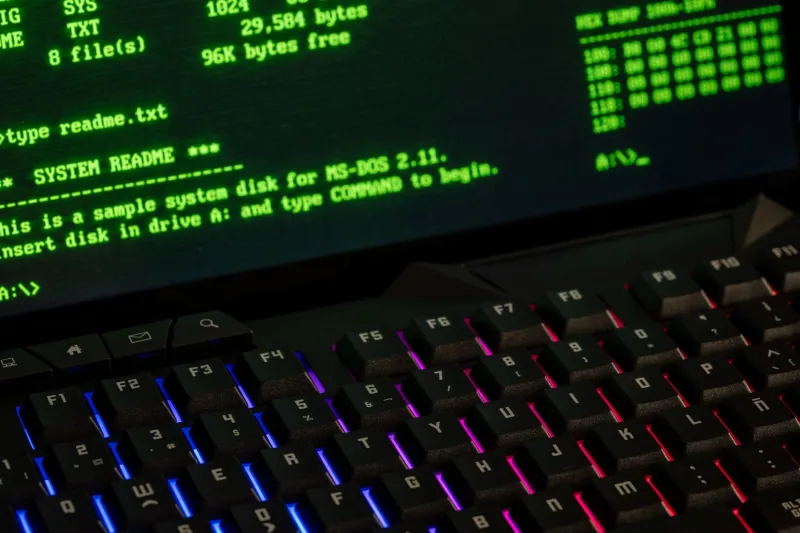
The origin story of leet speak — shorthand for "elite speak," with "elite" rendered numerically as "1337" — is less glamorous than the mythology suggests. It didn't emerge from some shadowy hacker collective operating out of a government-adjacent bunker. It started, like most great internet traditions, in the most unglamorous place imaginable: early bulletin board systems in the 1980s.
These proto-internet hangouts attracted a specific breed of early adopter — technically literate, deeply territorial, and absolutely convinced that what they were doing was too important and too dangerous for civilian eyes. To keep conversations hidden from automated keyword filters and sysadmin snoops, users began substituting letters with visually similar numbers and symbols. An "E" became a "3." An "A" became a "4." An "O" became a "0." Simple substitutions, practical origins.
But here's the thing about giving humans a new toy: they will immediately take it way further than necessary.
From Hacker Utility to Teenage Aesthetic
By the time the mid-'90s internet boom dragged millions of ordinary American households online — armed with AOL free trial CDs and a dial-up modem that sounded like a robot having a medical episode — leet speak had already completed its first major evolution. It was no longer just a filter-dodging utility. It was a culture.
Hacker forums and early gaming communities had transformed the original substitution cipher into something far more elaborate. Spelling was not just modified; it was weaponized. Words were deliberately mangled in ways that had nothing to do with filter evasion and everything to do with establishing hierarchy. "Hacker" became "h4xx0r." "Skills" became "sk1llz." "You" became "j00" or "u" or sometimes just a pointed silence that communicated contempt more efficiently than any dictionary word.
The grammar deteriorated in specific, meaningful ways. Plurals gained unnecessary Z's. Verbs shed their conjugations like a snake shedding skin. Insults became baroque architectural structures of contempt. To call someone a "n00b" (newbie, or newcomer, delivered with the energy of a death sentence) was to locate yourself above them in a hierarchy that existed entirely inside shared imagination — and yet felt completely real.
This was, essentially, the internet's first attempt at a class system. And like most class systems, it was both ridiculous and completely effective.
The AOL Moment: When 1337 Went Mainstream and Immediately Got Weird
The true golden age of leet speak — its baroque, maximalist, completely unhinged peak — arrived when it escaped the hacker forums and crash-landed into mainstream teen culture. AOL Instant Messenger was the delivery vehicle. Chat rooms were the petri dish. And American teenagers, bored and newly online in numbers that nobody had anticipated, were the culture medium.
Suddenly, leet speak wasn't about evading keyword filters or establishing hacker credibility. It was about being cool in the sixth grade. Kids who had never touched a command line in their lives were typing "OMG 1 c4n'7 b3l13v3 h3 s41d 7h47" to their friends three houses away, presumably while their parents tried to use the phone and got that horrible screeching sound instead.
The irony was immediate and complete. A linguistic code invented to exclude outsiders had been adopted by the exact demographic it was designed to exclude. The hackers, such as they were, looked on in what can only be described as horrified recognition — the feeling of watching your obscure favorite band headline Coachella.
But the mainstream adoption produced something the original version never had: pure, uncut absurdity. At peak leet, entire sentences became nearly unreadable even to experienced practitioners. "H4v3 y0u s33n 7h3 n3w 3p1s0d3" required genuine decoding effort. The form had eaten the function entirely. It was no longer a cipher. It was performance art.
The Grammar of Dominance
What made leet speak genuinely interesting — and this is not a sentence anyone expected to write — was its internal consistency. Beneath the chaos, there were rules. Agreed-upon substitutions. Accepted spellings. A shared vocabulary of insults and affirmations that functioned as a fully operational social dialect.
"Pwned" (a legendary typo of "owned" that became more famous than the original word) communicated defeat. "L33t" or "elite" signaled belonging. "n00b" established hierarchy. "h4xx0r" implied technical mastery whether or not any actual hacking was occurring. "w00t" — a celebration so enthusiastic it required two zeros — became the internet's first genuinely cross-platform expression of joy, eventually making it all the way to Merriam-Webster's word of the year in 2007, which was either a triumph or a funeral depending on your perspective.
The gaming community, particularly in the early days of online multiplayer, turned leet speak into a full competitive vocabulary. Trash talk was delivered in leet. Victory was announced in leet. Accusations of cheating — always the most passionate communications in any gaming forum — were rendered in leet with the fervor of legal briefs written by someone who had just consumed an entire bag of Doritos.
The Fall, the Punchline, and the Resurrection
Like all things that achieve sufficient mainstream penetration, leet speak eventually became uncool in direct proportion to how widely it spread. By the mid-2000s, it had completed the full cycle: niche utility, subculture identity, mainstream trend, object of mockery. Typing in leet was no longer a signal of belonging to something exclusive. It was a signal that you were, in fact, a n00b.
The death blow came from multiple directions simultaneously. Social media platforms standardized language. Texting autocorrect waged quiet war on deliberate misspelling. And perhaps most fatally, adults — the original target of the exclusion — started using it ironically at corporate team-building events, which is where all youth culture goes to die.
But here's the thing about internet culture: nothing actually dies. It just waits.
Today, leet speak exists in a state of knowing, affectionate irony. Typing "1337" unironically is a joke. Typing it knowingly is also a joke, but a different, better joke. Gaming communities still deploy "pwned" without a second thought. "n00b" has transcended its origins to become a genuinely useful English word. And somewhere, in some Discord server, someone is typing in full leet just to see if anyone notices, and someone else is absolutely noticing.
The secret language that was supposed to keep adults out eventually became a nostalgia object that adults share with their kids. Which is probably the most 1337 possible ending.
The Legacy Nobody Planned
What leet speak actually invented — and this is the part that doesn't get enough credit — was the idea that internet communication could have an aesthetic. That how you typed was as meaningful as what you typed. That language online could be a costume, a signal, a membership card, a joke, and a weapon all at the same time.
Every piece of internet slang that came after — every "lol," every "smh," every deliberately ironic misspelling, every "no thoughts head empty" — owes something to the precedent that a bunch of teenagers typing like malfunctioning robots in 1998 accidentally established. The internet could have its own language. That language could mean something. And if you didn't understand it, that was entirely the point.
ph34r 7h3 l3g4cy, fr13nd. 1t'5 r341.