Every Download Was a Prayer: The Glorious, Virus-Laden Chaos of LimeWire Nation
There is a specific kind of courage that only children of the early 2000s truly understand. It had nothing to do with gym class rope climbs or talking to your crush at the school dance. It was the courage required to double-click a 4.2MB file called eminem_without_me_REAL_NOT_FAKE.mp3 and just wait to see what happened next.
Welcome to LimeWire. Population: everyone. Casualties: your parents' computer.
The Green Grim Reaper of the Family Desktop
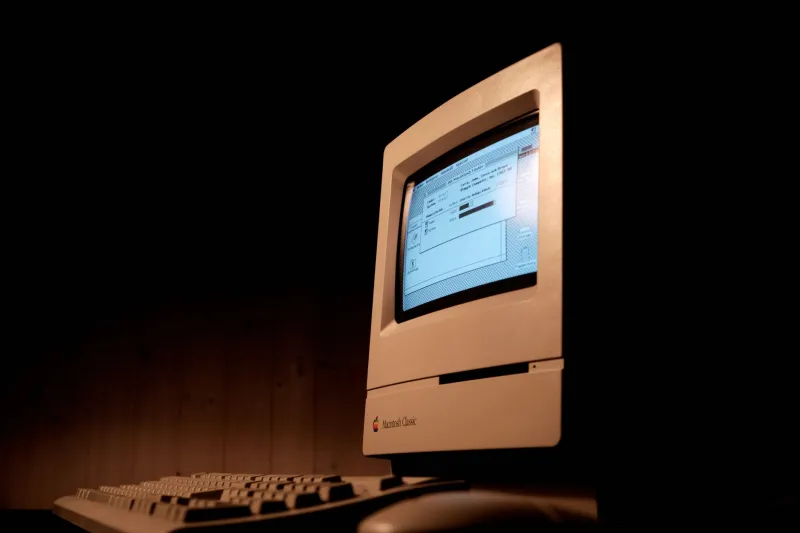
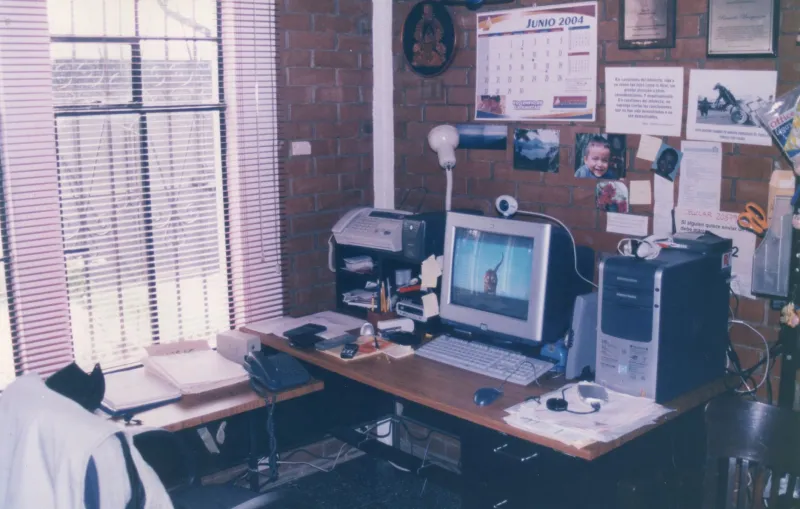
LimeWire launched in 2000 and almost immediately became the most dangerous piece of software a sixth-grader could install without technically breaking any rules they fully understood yet. Built on the Gnutella peer-to-peer network, it promised something that felt genuinely revolutionary at the time: other people's music, for free, delivered straight to whatever beige Dell Dimension was humming away in your basement.
The interface was deceptively cheerful. A lime-green logo. Clean tabs. A search bar that looked like it belonged on a homework website. You typed in a song name, hit search, and watched a list populate with results from strangers' hard drives scattered across America. It felt like magic. It was, in practice, closer to a slot machine operated by anonymous weirdos.
The results column had a "quality" indicator — little colored circles meant to signal audio fidelity. Green meant good. Red meant bad. In reality, the color system was about as reliable as asking a raccoon to proofread your essay. A green-circled file might be pristine. It might be thirty seconds of static followed by a man coughing. It might be a virus wearing an MP3's clothing like a Halloween costume from the discount bin.
You clicked anyway. Because what else were you going to do — buy the CD?
The Mislabeling Industrial Complex
Here is something the music industry never fully appreciated about LimeWire: it was an extraordinary teacher of skepticism. Not because anyone sat you down and explained critical thinking, but because the platform's entire ecosystem was built on a foundation of spectacular, almost artistic deception.
Files were mislabeled constantly, either by accident or by people who found it funny, or by early malware distributors who had discovered that kids would download literally anything if it claimed to be a Nelly song. You'd search for "Crazy in Love" and find, upon playback, a German polka track, a voicemail someone forgot to delete, or — in the legendary worst-case scenario — a screaming audio file that started silent and then exploded at full volume, specifically designed to terrify anyone using headphones.
The educational upshot was real, though. After downloading your fourth fake file in a row, you started developing instincts. File size too small? Suspicious. Username looks like a keyboard smash? Skip it. Description has fourteen exclamation points? Absolutely not. By the time most LimeWire kids were teenagers, they had already internalized a working model of "if it seems too good to be true, it probably is" — a lesson that many adults still haven't learned.
The Virus. Oh, The Virus.
Let's talk about what happened when your instincts failed you.
The LimeWire virus experience was its own distinct cultural phenomenon. It didn't happen to everyone, but it happened to enough people that every household with a shared computer has at least one story. The symptoms were gradual, then total. First, the computer got slow. Then weird pop-ups appeared — not the annoying-but-harmless kind, but the deeply alarming kind that suggested your machine had been recruited into purposes you didn't fully understand and definitely didn't consent to. Toolbars multiplied. The homepage changed. Internet Explorer, already a compromised institution, became completely unhinged.
And then came the reckoning: the moment a parent sat down at the family computer, tried to check email, and instead found a desktop that looked like a Times Square billboard designed by someone who hated them personally.
The conversations that followed varied by household. Some kids got grounded. Some got the "we're taking the computer away" speech. Some very unlucky souls had to sit through a parent calling the Geek Squad and watching a stranger in a polo shirt spend three hours explaining what Kazaa and LimeWire actually were, in detail, in front of the whole family.
It was, in the truest sense, a consequence. A real one. Delivered not by a teacher or a guidance counselor, but by the cold logic of a peer-to-peer network that did not care about your weekend plans.
The Wait Was Part of the Experience
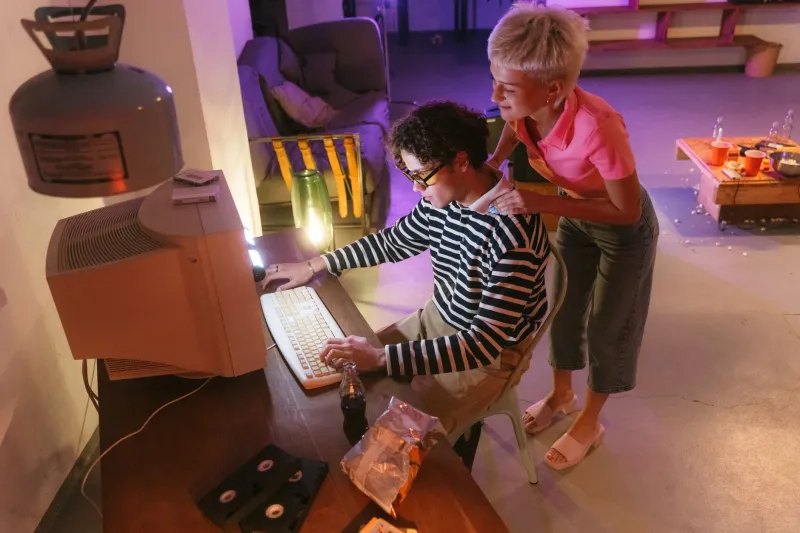
What streaming services took from us — and this is not nothing — was the specific emotional texture of a slow download. On a dial-up or early broadband connection, a single song could take anywhere from four minutes to a genuinely insulting forty-five, depending on the speed of whoever's computer you were leeching it from. You watched the progress bar. You refreshed the queue. You left and came back. You whispered small prayers to no deity in particular.
When the file finished and it was actually the right song — actually the thing you wanted, full length, correct title, playing cleanly through Windows Media Player — the satisfaction was almost physical. You had earned that MP3. You had waited for it, worried about it, and survived it. Spotify has never once made anyone feel that way.
The Lawsuit That Ended the Party
The Recording Industry Association of America had been watching LimeWire with the energy of a neighbor who has been silently documenting your parking violations for three years and is finally ready to act. After years of legal maneuvering and a broader campaign that included suing individual file-sharers (including, famously, a twelve-year-old and a grandmother), the RIAA eventually secured a judgment against LimeWire's parent company in 2010. The software was ordered to disable its file-sharing functions. The lime-green icon went dark.
By then, most of its core users had already aged into iTunes, then Spotify, then the full streaming ecosystem that made the whole argument moot. The music industry won the legal battle and then immediately lost the war to a Finnish startup, which is perhaps the most internet-appropriate ending imaginable.
A Love Letter, Annotated
LimeWire was irresponsible software. It spread malware, enabled copyright infringement on a massive scale, and was almost certainly responsible for more parental groundings than any technology before or since. None of that is defensible, exactly.
But it was also, for a very specific window of time, the internet at its most raw and democratic and genuinely weird. It was a place where a kid in Ohio could, for free, access music that their local radio station would never play, discover artists that hadn't broken through yet, and build a taste in music that was actually their own — assembled track by track, risk by risk, mislabeled file by mislabeled file.
It taught an entire generation to be skeptical, patient, and slightly paranoid about unknown file extensions. Those are not bad lessons. They just came in a very chaotic package.
Double-click to install. You already know what happens next.