Glitter Glue and Existential Dread: How Regretsy Became the Most Honest Thing on the Internet
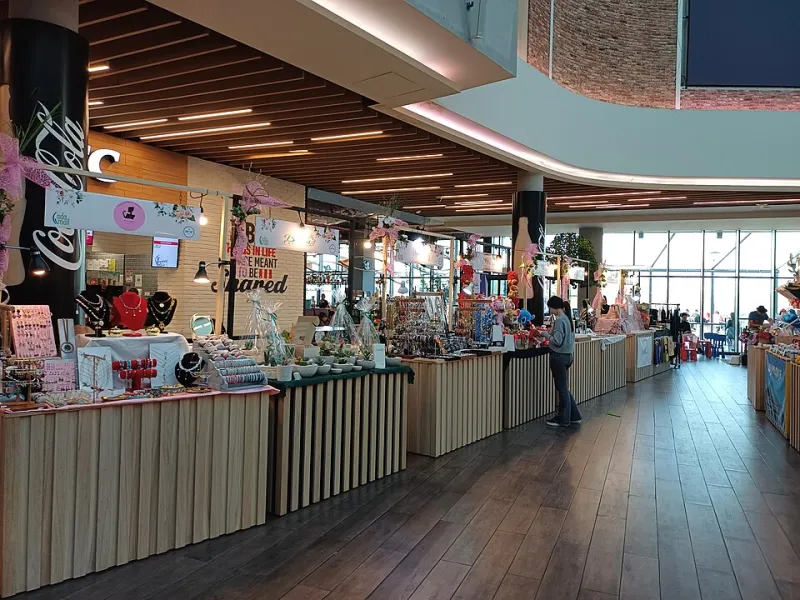
Photo: Uspon udruzenje, CC0, via Wikimedia Commons
In 2009, a woman named April Winchell started a blog about terrible things for sale on Etsy. She called it Regretsy. The tagline was "Where DIY Meets WTF." This is funny. The blog was also funny. But reducing Regretsy to its punchlines is like describing the Library of Congress as a place where they keep old magazines. Technically accurate. Completely inadequate.
Regretsy ran until 2013. In those four years, it documented something genuinely important about what the internet was becoming—and what human beings do when you give them a global marketplace and zero quality control.
The Etsy Problem (Which Was Also Etsy's Beauty)
To understand Regretsy, you have to understand what Etsy was in 2009. It wasn't the semi-professionalized craft marketplace it has since become, full of print-on-demand shops and small businesses with actual branding strategies. Early Etsy was wilder. It was a place where someone might list, with complete sincerity, a necklace made from a taxidermied squirrel wearing tiny sunglasses, priced at $85, accompanied by a product description that was somehow both incomprehensible and emotionally moving.
This happened. Constantly. At scale.
Etsy's founding premise—that handmade goods had inherent value, that the person behind the object mattered—created an environment where anything could be listed, because the act of making it yourself was supposed to be the point. This was genuinely democratic and genuinely chaotic in equal measure. There were no gatekeepers. There were also, therefore, no filters.
Regretsy walked straight into that gap.
What the Blog Actually Did
Here's what made Regretsy different from pure mockery: Winchell was funny, but she was never cruel in a way that felt comfortable. The humor had an edge of something else—recognition, maybe, or the specific affection you feel for something that is genuinely bizarre but also undeniably human.
The items she featured were often objectively ridiculous. A crocheted uterus. A painting of Nicolas Cage as Jesus. Jewelry made from human hair that the seller described, earnestly, as "a love offering." These were real things that real people made with their actual hands, then photographed, then wrote descriptions for, then put on the internet for strangers to potentially purchase.
That last part is what Regretsy kept circling back to, whether it meant to or not: someone made this. Not a factory. Not an algorithm. A person, somewhere, in a house or apartment or garage, decided that the world needed this particular crocheted uterus and then spent real time bringing it into existence. There is something in that fact that is simultaneously very funny and strangely moving, and Regretsy sat right at the intersection of those two feelings and refused to move.
The comment sections were their own ecosystem—a community of regulars who developed in-jokes, feuds, and an elaborate shared vocabulary. Regulars called themselves "Regretsy-ites" or sometimes "the Regretsians," which tells you about the level of self-aware absurdity operating at all times.
The Charity Angle That Nobody Expected
The moment that complicated Regretsy's snark-blog reputation was a 2010 incident that became something of a legend in early internet culture. Winchell organized a charity drive through the site to buy Christmas gifts for children in need. PayPal froze the funds, citing vague policy violations, and Winchell went public with the dispute in a post that was simultaneously furious, funny, and genuinely righteous.
PayPal eventually caved. The children got their gifts. Regretsy raised tens of thousands of dollars for various charitable causes over the years.
This created a dissonance that was, in retrospect, very revealing. Here was a site built on making fun of strangers' Etsy listings, also doing more meaningful community work than many platforms that positioned themselves as explicitly positive spaces. The snark and the generosity coexisted without apparent contradiction, because Winchell seemed to understand something that the internet was still figuring out: that you could find things ridiculous and also care about people. That mockery and affection were not mutually exclusive. That the same community that would collectively roast a $200 felted owl could also organize to help kids have a decent Christmas.
The Shutdown and What It Left Behind
Regretsy closed in 2013. Winchell posted a goodbye that was characteristically funny and also genuinely sad, noting that the site had run its course and that she was tired. The community mourned with the particular intensity of internet communities that have built something real in the comments section of something ostensibly trivial.
What Regretsy left behind was a question that the internet has been arguing about ever since: where is the line between critique and cruelty? Between documentation and exploitation? Between laughing at something and laughing with something?
The answer Regretsy modeled—imperfectly, inconsistently, but more thoughtfully than it got credit for—was that the line runs through sincerity. The sellers on Regretsy were sincere. They made weird things because they wanted to. They priced them at baffling amounts because they believed in their work. They wrote product descriptions that read like fever dreams because they were trying to communicate something genuine.
Making fun of that without acknowledging the sincerity underneath it would have been mean. Regretsy, at its best, always acknowledged the sincerity. It laughed and respected. It mocked and documented. It was, in its weird way, one of the most honest things on the internet during the years it existed.
Why It Was Always More Than It Looked Like
Internet historians—yes, that is a real category of people now, and WikiChan employs their spiritual descendants—tend to focus on Regretsy as a precursor to snark culture, the ancestor of sites and accounts built on curating the internet's failures for comedic purposes.
That framing is accurate but incomplete. Regretsy was also an archive. Every post was a document of someone's creative impulse, however misguided, however strange. Taken together, those posts constitute a weirdly comprehensive record of what ordinary American people were making, valuing, and trying to sell to each other in the early years of the handmade economy.
Someday, a cultural historian is going to write a serious paper about what Etsy listings from 2009 to 2013 tell us about American folk art, cottage industry, and the democratization of commerce. They are going to owe April Winchell an enormous debt.
She will probably find this very funny.