Cursed, Blessed, and Forwarded 47 Times: The Unhinged Golden Age of Chain Emails
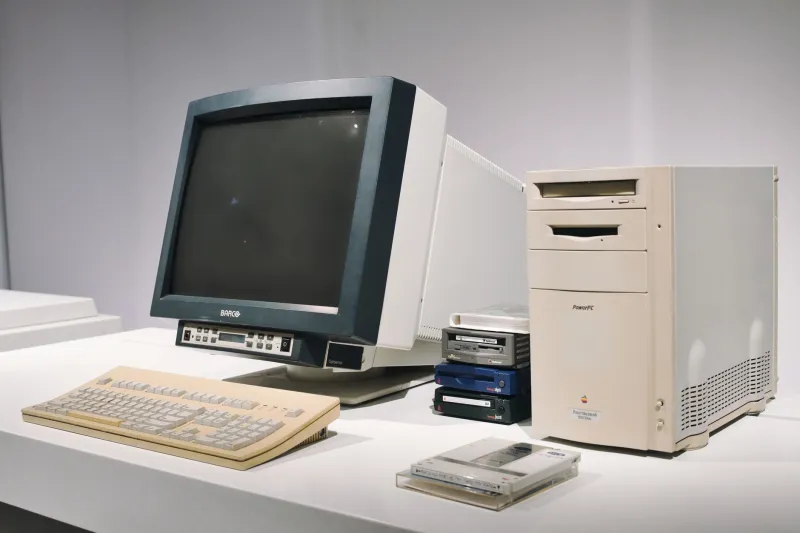
Somewhere in America, right now, there is a grandmother who still half-believes that Bill Gates was going to pay her $245 for every person she emailed in 2003. She never got the check. She also never entirely stopped waiting for it. This is the legacy of the chain email — a uniquely American folk art form that arrived via dial-up modem, clogged inboxes like digital cholesterol, and somehow laid the psychological groundwork for every piece of viral misinformation you've scrolled past in the last decade.
We're not here to dunk on your relatives. We're here to document history. And the history of chain emails is, genuinely, one of the most chaotic and creative chapters in the entire story of the internet.
The Original Viral Content Creators (Who Had No Idea What They Were Doing)
Let's set the scene: it's 1998. You have a Hotmail account. Your screen name probably references either a sport or a celestial body. You log on, wait approximately four geological epochs for the connection to establish, and open your inbox to find seventeen forwarded messages from people named things like "[email protected]."
Chain emails didn't begin with the internet — they evolved from actual paper chain letters, which date back to at least the 1880s and were already driving postal workers insane long before Wi-Fi existed. But the internet gave them rocket boosters. Suddenly, forwarding a message to twenty people wasn't a logistical project involving stamps and envelopes. It was three clicks and a prayer.
The result was an explosion of anonymous, unsigned, mutating content that traveled faster than anyone could fact-check it — which, to be fair, was mostly because "fact-checking" wasn't yet a concept most people applied to things their coworker Karen forwarded them.
The Four Horsemen of the Forwarded Email
Chain emails sorted themselves into a few distinct and deeply deranged genres, each exploiting a different corner of human psychology.
The Threat. These were pure folklore, digitized. "Forward this to 10 people within 24 hours or you will have 7 years of bad luck." "A girl named Carmen died in 1995 and if you don't send this to 15 people she will appear in your mirror at 3am." Rational adults — people who paid taxes and held down jobs — forwarded these with their hearts beating just a little faster than normal. The threat chain email was essentially a ghost story that had figured out how to tell itself.
The Heartwarmer. A dying child. A soldier overseas. A dog that waited at the train station. These emails promised that for every forward, a corporation would donate money to a cause that was almost certainly fictional. AOL and Intel were particularly popular imaginary sponsors. Nobody ever questioned why two tech giants had agreed to monitor email forwards and cut checks accordingly. That's not how any of this works, but it didn't matter — the emotional payload had already detonated.
The Warning. Urgent. Alarming. Typed entirely in capital letters with seventeen exclamation points. "DO NOT OPEN ANY EMAIL WITH THE SUBJECT LINE 'GOOD TIMES' — IT WILL DESTROY YOUR HARD DRIVE AND POSSIBLY YOUR SOUL." The Good Times virus hoax, which began circulating in 1994, was so persistent that the FCC eventually issued an official statement debunking it. The statement was then, naturally, forwarded around as proof the virus was real.
The Scam. And then there was the Nigerian prince. Formally known as the "advance-fee fraud" or "419 scam" (named after the section of Nigerian criminal code it violated), this one was a masterpiece of social engineering dressed up in spectacular prose. A deposed royal. A frozen fortune. A mutually beneficial arrangement that required only your bank account details and a modest upfront fee. The emails were often gloriously, almost artistically, written — long, formal, dripping with the kind of elaborate courtesy that made them feel oddly trustworthy. Thousands of Americans lost real money to these. The FBI estimates advance-fee fraud costs US victims hundreds of millions of dollars annually, even today.
Accidental Viral Marketers and the Psychology of the Forward
Here's the thing that makes chain emails genuinely fascinating from an internet history perspective: the people writing them were, largely, inventing viral content mechanics from scratch with no framework, no analytics dashboard, and no media theory degree.
They figured out, through pure intuition and trial and error, that content spreads when it triggers strong emotion — fear, warmth, outrage, or urgency. They understood that a clear call to action ("forward this NOW") dramatically increases distribution. They discovered that false scarcity and time pressure ("within 24 hours") override rational skepticism. They learned that attaching a famous brand name (Microsoft, Bill Gates, the Red Cross) adds a veneer of credibility.
This is, word for word, the playbook that modern clickbait, Facebook health misinformation, and political panic-sharing still runs on. The chain email didn't just predict viral media — it essentially trained an entire generation of internet users to share first and think never.
Why It Worked on Everyone's Aunt Specifically
The chain email era coincided with a massive wave of first-time internet users in the late 1990s and early 2000s — people who had no inherited intuition about what online communication looked like, no sense of how information moved through networks, and absolutely no reason to be suspicious of a message that arrived in their inbox from someone they knew.
Trust was the killer feature. Email, unlike a random website, came from a person. It came from your coworker, your mom, your church friend. The social proof was baked directly into the delivery mechanism. If Linda from accounting sent it, it must be worth reading. If Linda sent it AND it said forward to everyone you know, well, Linda wouldn't steer you wrong.
This is why the chain email is, in retrospect, less a story about gullibility and more a story about how trust networks get weaponized. The same dynamic plays out every single day on Facebook, WhatsApp, and whatever platform your relatives have colonized most recently.
The Inbox Is Empty Now
Chain emails didn't die so much as they evolved. Spam filters got smarter. Email clients got better. And then social media arrived and gave the same content a vastly more efficient distribution system — one with built-in sharing mechanics, algorithmic amplification, and billions of users who'd already been trained, by years of chain email conditioning, to forward things without thinking.
The Nigerian prince is still out there, by the way. He just lives in your DMs now.
So next time you see a Facebook post warning you that Bill Gates is tracking your shares to donate to charity, or a WhatsApp forward claiming that a specific fruit cures cancer, pour one out for the anonymous geniuses who pioneered this entire genre on a 56k modem in 1997. They never got credit. They never got the check from Microsoft. But they absolutely changed the internet — and not entirely for the better.